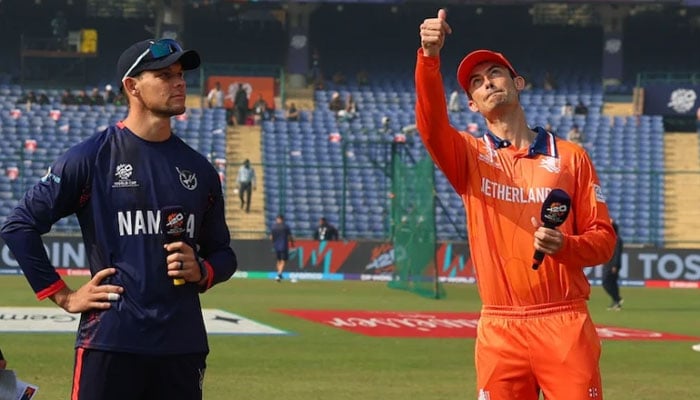
KARACHI: The captains of three International Cricket Council (ICC) affiliates, Netherlands’ Scott Edwards, Namibia’s Gerhard Erasmus and Scotland’s Richie Berrington, on Friday publicly criticized the apex body’s decision to revamp the qualification structure of its men’s World Cup cricket.
The ICC on Wednesday confirmed the revised structure for the 2027 ODI World Cup to be hosted by South Africa, Namibia and Zimbabwe.
While the tournament will feature 14 teams, it will adopt a new three-tier format aimed at creating more competitive matches and improving the experience for players and fans.
Under the revised format, all 14 qualified teams will compete in a three-stage tournament culminating in the final, with every result from the opening stages of the tournament given greater weight.
In the first round, teams 12, 13 and 14 compete in a round-robin ‘Super Series’, with only the top team advancing to the second round.
Round two will consist of two groups of six teams each. The top three teams from each group advance to the Super Seven stage, along with the highest-ranked remaining team in both groups. From there, the top four teams will qualify for the semifinals, with the winners competing in the finals.
The revamped format of the ODI World Cup has been met with anger and confusion from players from partner nations who are likely to be affected by the changes.
Also, the structural overhaul has left players questioning the relevance of the ICC Cricket World Cup League 2, in which eight associate nations play 36 matches each for a place in next year’s world qualifiers.
Netherlands captain Edwards warned in a statement released by cricket’s World Players Association (WCA) that the new format of the global tournament was “incredibly disappointing” and that such results would stunt the growth of the game globally.
“Qualifying for the ODI World Cup is a huge achievement for any country, so when the reality of that opportunity turns after years of planning, it’s incredibly disappointing,” Edwards said.
“The ICC talks a lot about growing the game globally, but results like this make it difficult for associate nations to play against the best teams in the world.
“Those opportunities are what help countries develop and inspire the next generation of players. If we are serious about making cricket a global sport, we need to create more opportunities on the world stage, not less.”
Erasmus of Namibia echoed his Netherlands views.
“For players from many countries, the ODI World Cup is not just another tournament. It’s our long form and something that’s built around a career and generations of players love it,” Erasmus said.
“We all agree that you have to earn the right to be there, but we also want the right to be given a real chance to compete on the biggest stage. This follows a long history of limited opportunities at the associate level,” he added.
Scotland captain Berrington, on the other hand, insisted that the ICC should bring “different perspectives” to the table when taking decisions that can have a significant impact on the game and the lives of players.
“We don’t expect players to make every decision, but we need to meaningfully consult on decisions that have significant impacts on the game and the lives of players,” Berrington said.
“Better decisions are made when different perspectives are brought to the table, and we urge sports to start doing that right,” he added.
Among the ICC’s other notable critics of changing the format of the tournament was Scotland opener George Munsey, who accused the apex body of what he described as the “top three” to favor India, Australia and England.
“It’s no surprise that the ICC has overlooked anyone outside the top three (Australia, England and India),” Munsey told an international cricket news website.
For the uninitiated, the ICC approved the changes during its annual conference in Edinburgh. Before seeking the approval of the ICC Board, recommendations are made by the Chief Executive Committee, which includes representatives of Chief Executives and Full and Associate Members.
According to the ICC, the revised formats are meant to create more meaningful matches, raise the standard of competition, strengthen the tournament structure and improve the overall experience for players and fans in both the ODI and T20 World Cups.